
Online video games have created elaborate virtual economies that resemble actual monetary frameworks. Gamers buy, sell, and trade digital assets, whose value changes over time. Such systems are like gambling in certain situations because of risk and uncertainty. Considering these economies, one can see how gaming and betting still overlap.
Digitizing Markets through Supply and Demand
In-game items are usually priced differently depending on their rarity and demand by the player. Short supply can lead to an increase in prices in the long run. This provides a marketplace that is driven by comparable principles to actual economies.
The Virtual Trading Speculation and Risk
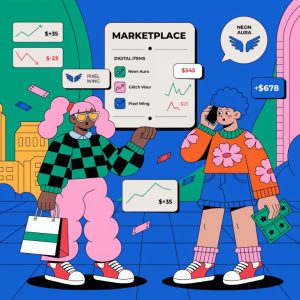 Players will invest in items with the hope that their value may go up. Nevertheless, a change in the market may result in losses. This speculative behavior has similarities with gambling behavior.
Third-Party Platforms Growing Opportunities
The external markets enable the players to exchange goods for real money. Such platforms augment availability and peril. They also blur the line between entertainment and money gaming.
Game Developers Controlling Economic Balance
Updates enable developers to control the availability and pricing of items. Such adjustments have the ability to affect the investments of players immediately. Balance of the economy is needed to make it fair.
End Notes
Virtual economies have converted online gaming into more than entertainment. They bring in money aspects that are similar to gambling mechanisms. On the one hand, they provide opportunities, but on the other hand, they come with risks. With the increased size of these systems, the mechanics of these systems become more important to learn.